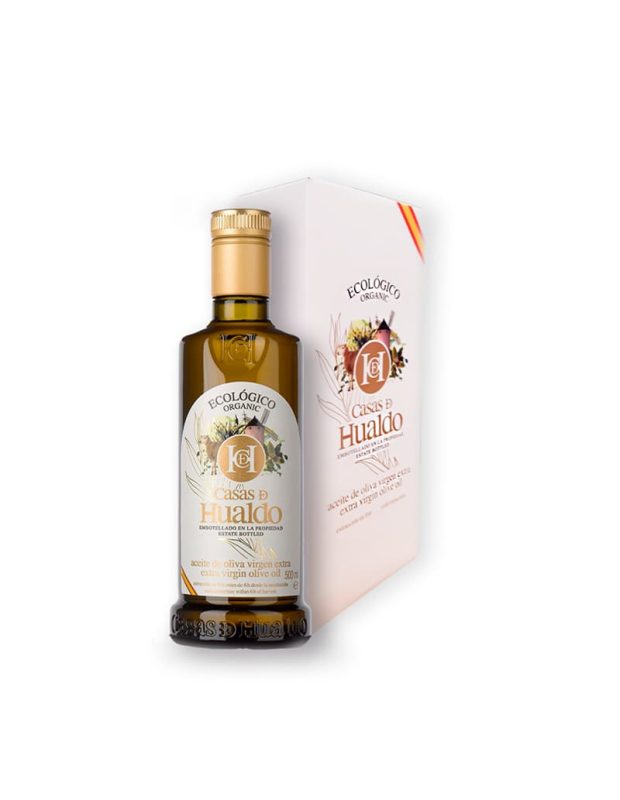
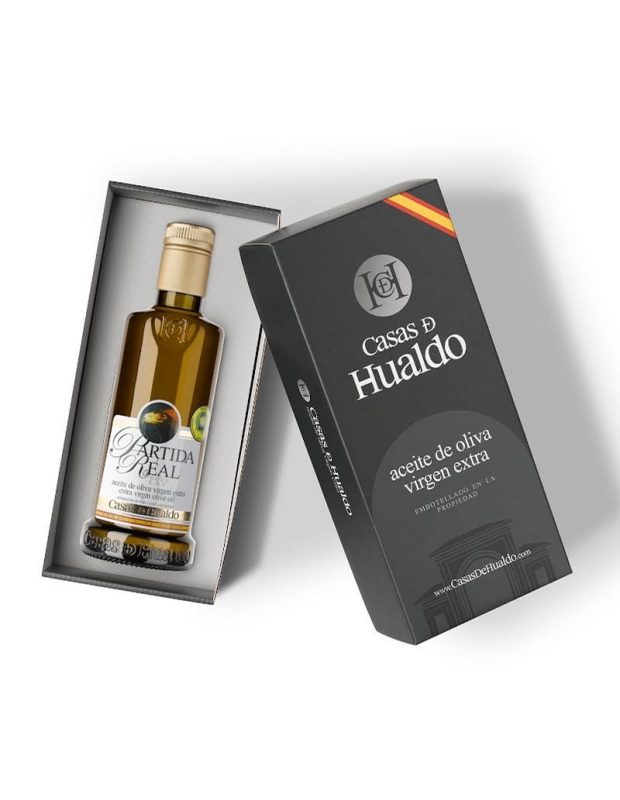
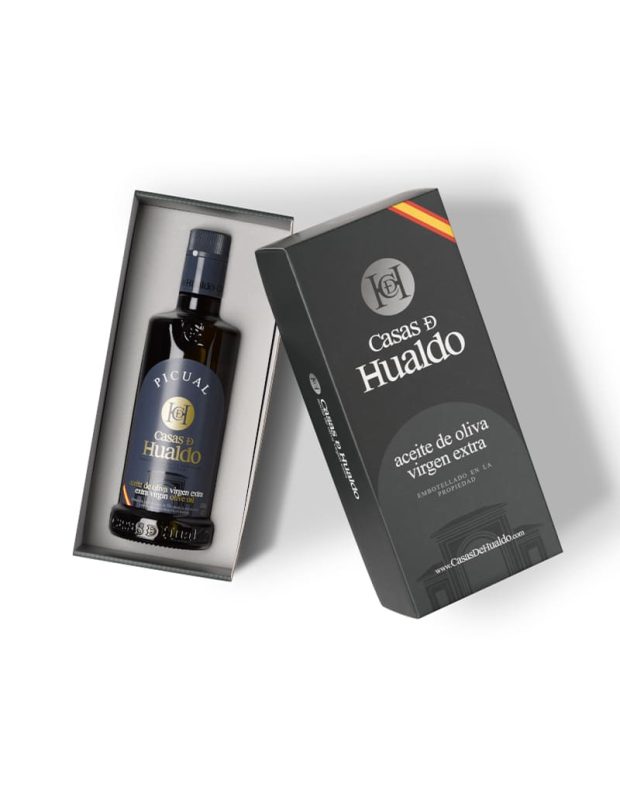
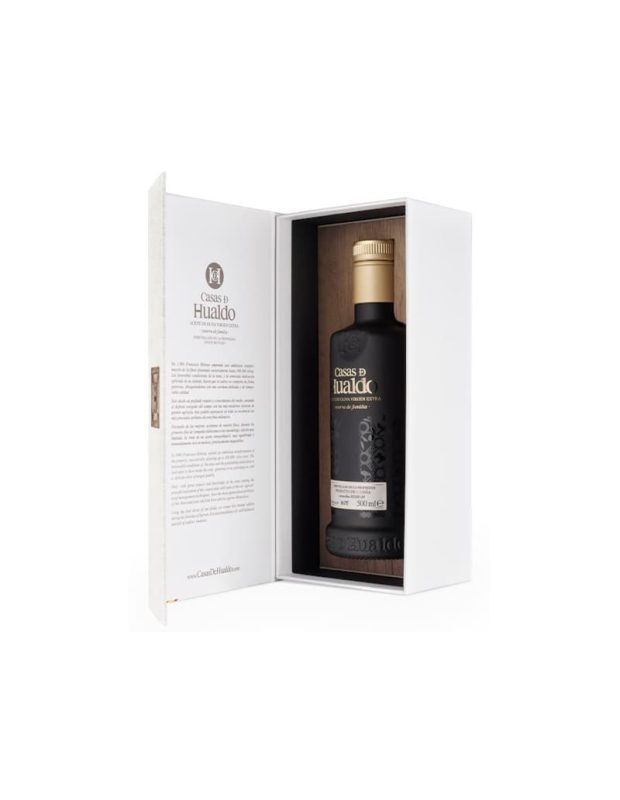
Here’s how olive oil is made. EVOO is the oily juice from olives that is mechanically separated from the fruit’s other components. Discover the selection of De Hualdo EVOOs, made from carefully selected olives using a meticulous process from milling to bottling.
1. Olive Milling
Did you know that olive milling is a fundamental process in the production of olive oil?
Through milling, the olives are crushed to extract their juice and obtain olive oil.
“Milling” means “grinding” or “crushing” the olives to extract the oil from them; it involves breaking down the structure of the plant tissues that contain their juice. This is done using a modern technological system consisting of special hammer or blade mills that tear the cell membranes, releasing the oil globules, which then coalesce to form larger droplets and come into direct contact with the aqueous phase present in the paste—derived from the vegetable water and residual water from the previous washing process.
“During milling, the olive oil comes into contact with the polyphenols and antioxidants present in the olives, which contribute the organoleptic properties that directly affect the quality of the oil.”
2. Agitation of the Olive Paste
The ground olive paste is transferred to paddle agitators where it is slowly agitated for a specific period of time, rotating and homogenizing the paste and gathering the oil globules into larger droplets.
This stage is crucial for separating the oil from the other parts of the olive (pulp, pit, skin, and vegetable water).
These beaters are equipped with a heating system consisting of a double wall or inner tube through which a heating fluid circulates.
This agitation process is very delicate, so we must ensure a short agitation time and prevent the mass from overheating. Therefore, the temperature must range between 24 and 27 °C to avoid causing detrimental changes in the oil’s quality and to preserve the volatile components, which are responsible for the aromas and flavors. At Casas de Hualdo, we use relatively small mixers to ensure uniform heat transfer.
To produce high-quality EVOO, it is necessary to work at a temperature between 24 and 27 °C. Higher temperatures can affect the oil’s organoleptic properties.
3. Centrifugation of Olive Oil
The blended paste is fed into a centrifuge, which consists of a rotating cylindrical-conical rotor and a helical scraper with a hollow shaft that rotates coaxially inside the rotor at a different speed.
This process involves subjecting the resulting paste to centrifugal force to separate—based on the densities of the olive’s components—the liquid fraction (oil), the pomace water (vegetation water), and the solid fraction (skin, pulp, and pit), which together form the pomace.
4. Oil Decanting
The liquid phase obtained from centrifugation is subjected to a second vertical centrifugation at twice the speed of the previous one or to natural decanting, which allows the oil to be separated from the remaining vegetable water based on the differences in density between the two.
5. Filtering the EVOO
After decanting, the oil undergoes a filtration process to remove any small particles of unwanted impurities or suspended sediment present in the oil. This process is carried out using a mechanical filtration system or cellulose filters, which are the ones we use at Finca Hualdo. This cellulose paper leaves the oil clean and transparent—the very essence of the olive—with a bright, vibrant color that preserves the oil’s quality characteristics.
Filtering also stabilizes the olive oil and slows its deterioration over time. It is essential for extending the shelf life of extra virgin olive oil, preserving organoleptic characteristics such as its flavor and aroma, and helping to keep it fresh for longer.
What are the advantages of filtered EVOO?
- Removes impurities
- Greater stability
- Longer shelf life
- Improved flavor and aroma
6. Storage and Packaging of Olive Oil
After this process, the oil is sorted into the various stainless-steel tanks in the cellar, maintained at a constant temperature between 15 and 20 °C, avoiding significant fluctuations.
The facility is designed to keep batches separate according to variety, quality, plot, or harvest date. Keeping them separate allows us to decide later whether they will be bottled as single-variety oils or blends.
Traceability is always associated with each tank: what it contains and when it was filled.
Food-grade stainless steel is one of the most common materials used in olive oil mills because it is highly durable, relatively inert, and allows for thorough and hassle-free cleaning during sampling, racking, or purging of sediment. The tanks are completely opaque: light does not pass through the steel, as radiation can accelerate oxidation reactions in the oil.
When a tank is not completely full, a gas zone remains above the oil, known as the headspace. If that space contains air, oxygen is available to participate in oxidative processes. To prevent this, inert gases such as nitrogen or argon are used to maintain a slightly inert atmosphere.
The oil is then transported through pipes to the bottling line. It is bottled in glass bottles that preserve its organoleptic properties and protect it from light and air. These containers are designed to ensure the highest quality and preservation of the oil. They then move on to the labeling line.