News

OLIVE BLOSSOM

In May, it’s time to enjoy an unforgettable experience at La Finca Hualdo.
The majesty of olive groves in bloom — the power of nature!

The result is a landscape of extraordinary beauty, full of life.

Visit us and stroll through fields covered in thousands of small white flowers. Discover it!

The flowering period is the first and most critical phase in the olive tree’s life cycle, as the future harvest is at stake. It takes place at the beginning of May and lasts one to two weeks, from the moment a flower begins to open until it finishes.

The olive tree branches begin to sprout, and the buds awaken after the winter dormancy. The flowering season begins at the Hualdo Estate.

What does the flowering stage involve?

It marks the beginning of the olive tree’s life cycle, as this is the stage of sexual reproduction in which the flowers are fertilised and gradually develop into olives over the following months.

Abundant flowering is essential for a good harvest.

Here’s how it happens:

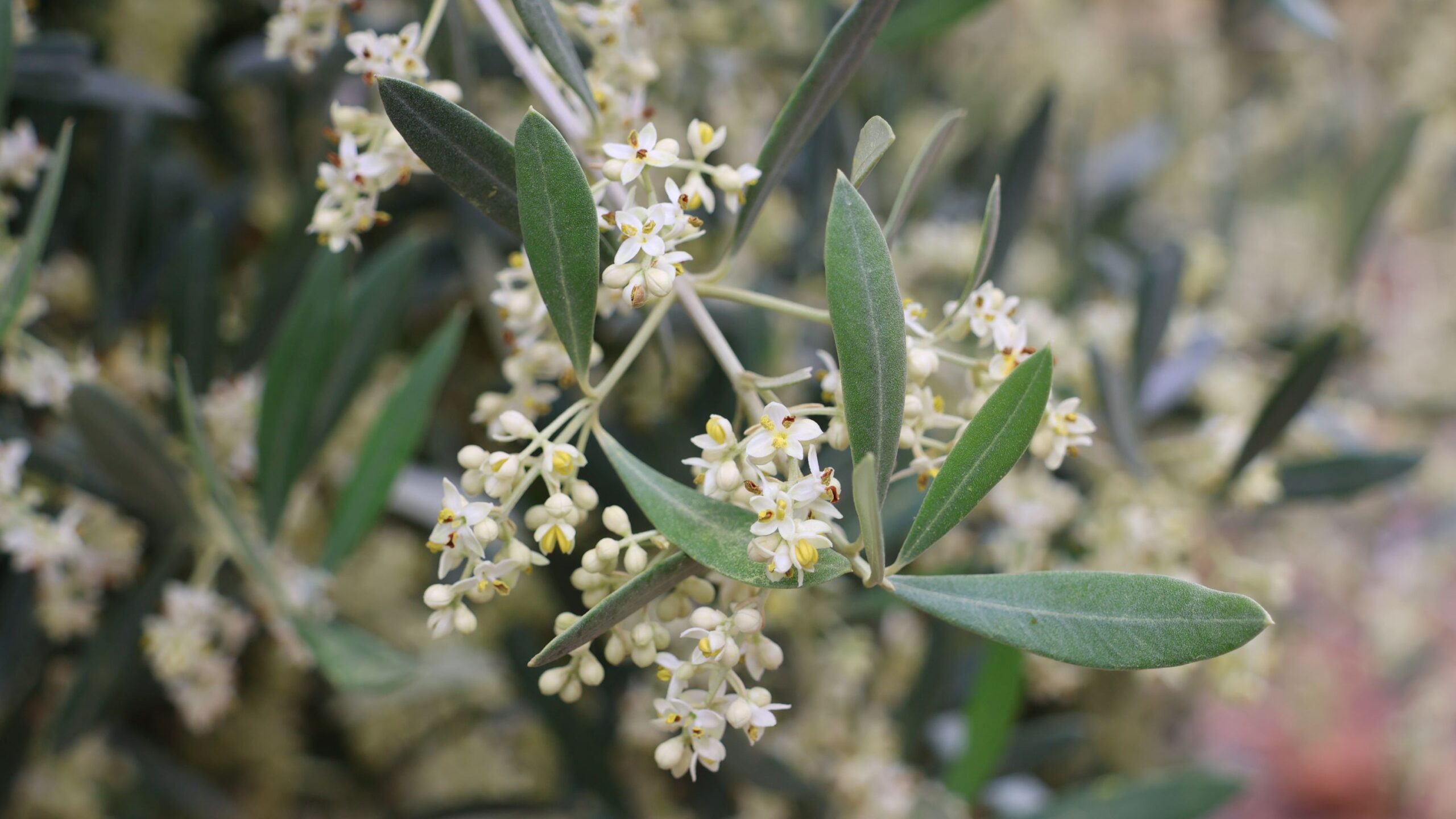
Flower buds develop on the previous year’s branches, while the shoot is the new growth of the current season. These buds give rise to inflorescences known as “clusters,” which contain numerous small, delicate white flowers.

The olive flower is tiny yet striking, standing out against the pale, silvery green of the leaves. They grow in clusters of 10 to 40 flowers. Each flower has four white petals arranged in a cross shape, with yellow-orange pollen at the centre.

Pollination

Did you know that most olive varieties are self-fertile, meaning they can pollinate themselves? Although they can also benefit from cross-pollination, wind is the olive tree’s main pollinating agent. It can come from anywhere, sometimes travelling several kilometres before settling on a flower.

After pollination, the fertilised flowers begin to transform into small fruits in a process known as “fruit set.” This occurs when the flowers lose their petals once fertilisation has taken place, marking the beginning of fruit development.

However, not all flowers will become fruit. The olive tree itself, in an act of natural wisdom, discards the weaker flowers and retains only those that are strong enough. In the end, only about 2–3% of fertilised flowers develop into olives.


This explains why each olive is such a precious “treasure” and why the oil we obtain from them holds such great value.

This stage determines how many olives the tree will produce. It is a delicate period: a lack of water, nutrients, or adverse weather conditions can lead to the loss of newly set fruits. Its success varies from year to year, depending on different climatic factors.

“Our elegant Casas de Hualdo extra virgin olive oil is the result of this story—one that begins with a small yet essential olive blossom.”

“Remember that behind every drop you enjoy of our oils, there is a natural process full of delicacy, subtlety, and wisdom.”

Leave a Reply

Your email address will not be published. Required fields are marked *